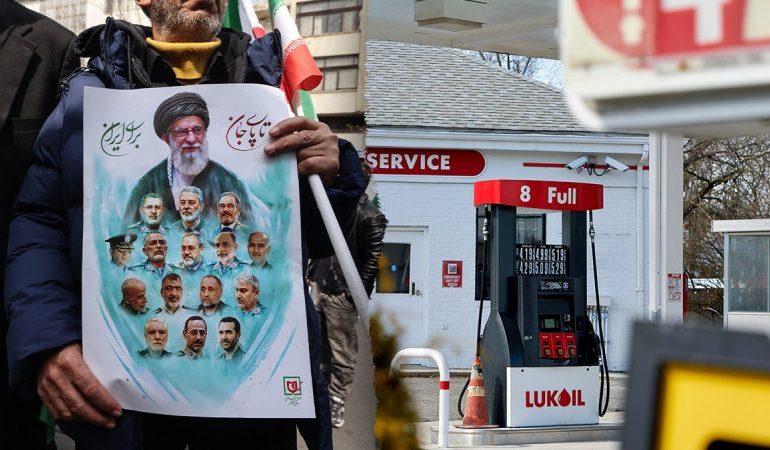
The new week in the financial markets has started with some uncertainty around the geopolitical situation, despite the euphoria for the US stock market last week. Nasdaq has shown the best week for the long time fueled by rumors about the possibility of a peace agreement between US and Iran and a ceasefire between Israel and Lebanon.
VIX (S&P 500 volatility index) has fallen below 18: the market seems to be pricing in the recovery of the oil crisis before June, with Brent falling below $100 and WTI Crude oil below $90. The Hormuz strait still stays closed in general, with war insurance premiums quoted at 0.8%, in comparison to 0.15% during normal periods. That is still lower than 2% (that was a level during the peak of escalation), but still far “back to normal”.
We can expect Crude oil to wobble in a range for some time, as geopolitical tensions don’t seem to disappear.
FED’s balance sheet. Source: https://www.federalreserve.gov/monetarypolicy/bst_recenttrends.htm
Notably, market conditions seem to be slowly leaning towards easing of market sentiment, as the probability of a modestly dovish scenario for the interest rate in the US slowly rises. The CMEGroup’s Fedwatchtool records increasing probabilities for at least one step decline of the interest rate until the year end. The market currently is not pricing in a possible escalation, which we see in a form of a steady positive market sentiment.
FED’s balance sheet is consistently growing since January 7th, pressuring the real interest rate and injecting liquidity to the financial markets. That might be the indirect reason why stocks have been performing well last week – when the liquidity increases in the system, the risk-on regime turns on very quickly. There’s a scheduled speech of Kevin Walsh (the new supposed FED’s chief) in Congress on Tuesday. If his speech would send a dovish message, markets may develop the new “risk-on cycle”, pricing in a further decline of the US dollar, rise of bonds and cyclical assets.
As usual, traders pay attention to the truce between US and Iran and possible extension of the ceasefire. Should the situation escalate, that would again lift oil prices and provoke “fly-to-safety” mechanism in the markets (strengthening US dollar)
Now, let’s try to find any potentially interesting opportunities for the week ahead.
BTCUSD
The first possible scenario for the “dovish FED narrative” candidate for the upside breakout would be Bitcoin. The funding rate for Bitcoin futures on crypto exchanges has been at the record low recently, which usually corresponds to the market bottom.
The BTCUSD chart is building inside of a range bound “cup-and-handle” formation, which has a chance to be broken to the upside, with a price developing the upswing towards 85000 – 87000 level.
The price is holding within the widening formation, and if the reversal is confirmed, it’s possible to observe the price action moving to the upper border of the formation with achieving the level of $82000 (the approximate border of the formation) and above.
BTCUSD, daily chart. Source: Exness.comUS30 (Dow Jones)
If the “risk-on” regime in the markets will prevail, Dow Jones may get back in play, as the rotation between tech and industrial stocks may occur. The Dow Jones index is lagging behind and positioned below the historical high unlike Nasdaq, which had set another all-time-high during last week.
If there would be no significant escalation in the Middle East, stock markets may continue rising in a rotational phase. The price may lock in a short-term consolidation area: the breakout of it would open the path to testing previous all-time-high.
US30, Daily chart. Source: Exness.com